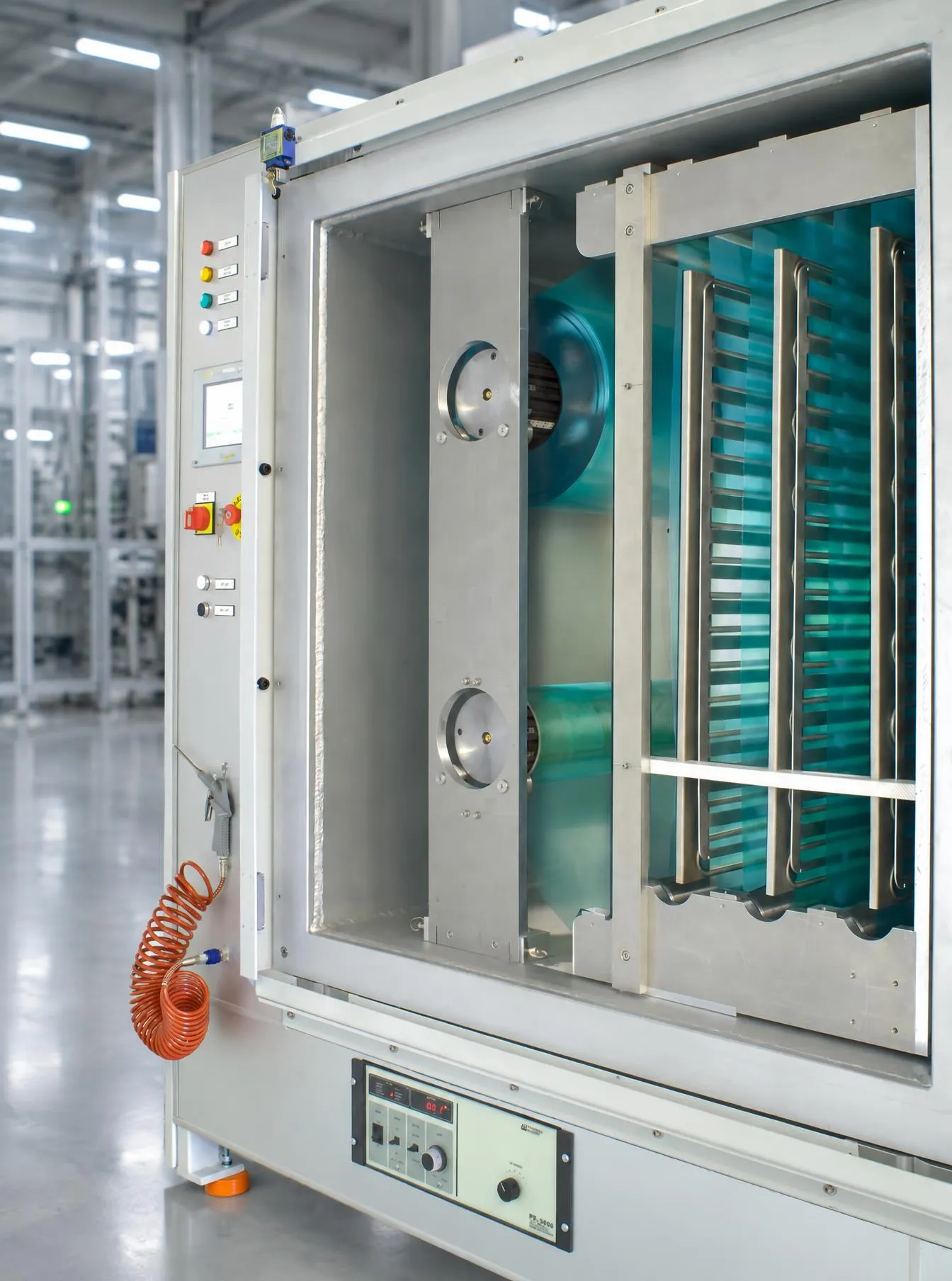
Through-thickness
Reaches the inner surfaces of pores, fibres and 3D cavities.

Plasma is the fourth state of matter. Add energy and a solid becomes a liquid, a liquid a gas, and a gas a plasma: a mix of ions, electrons, radicals and neutral species that reacts with every exposed surface. In an open-cell structure, it reaches the inner surfaces too.
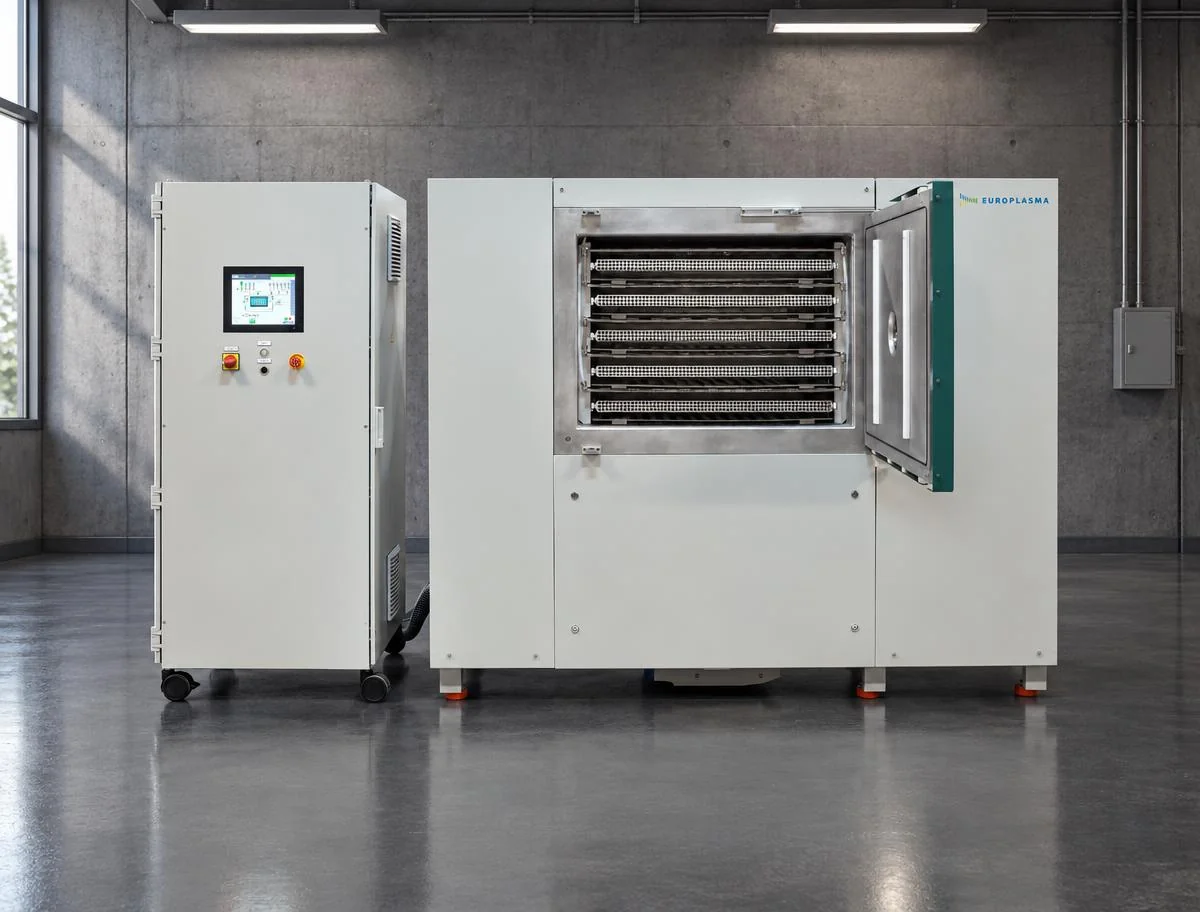
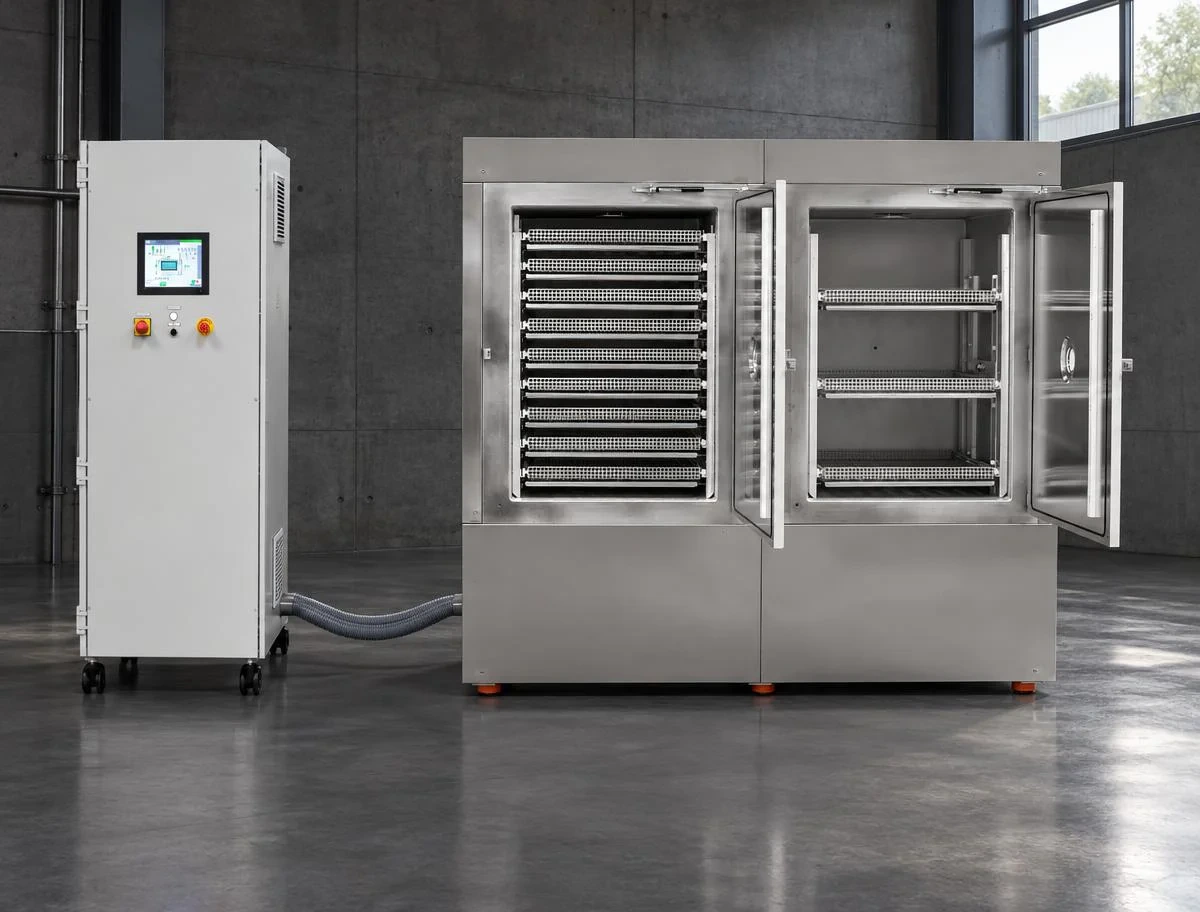
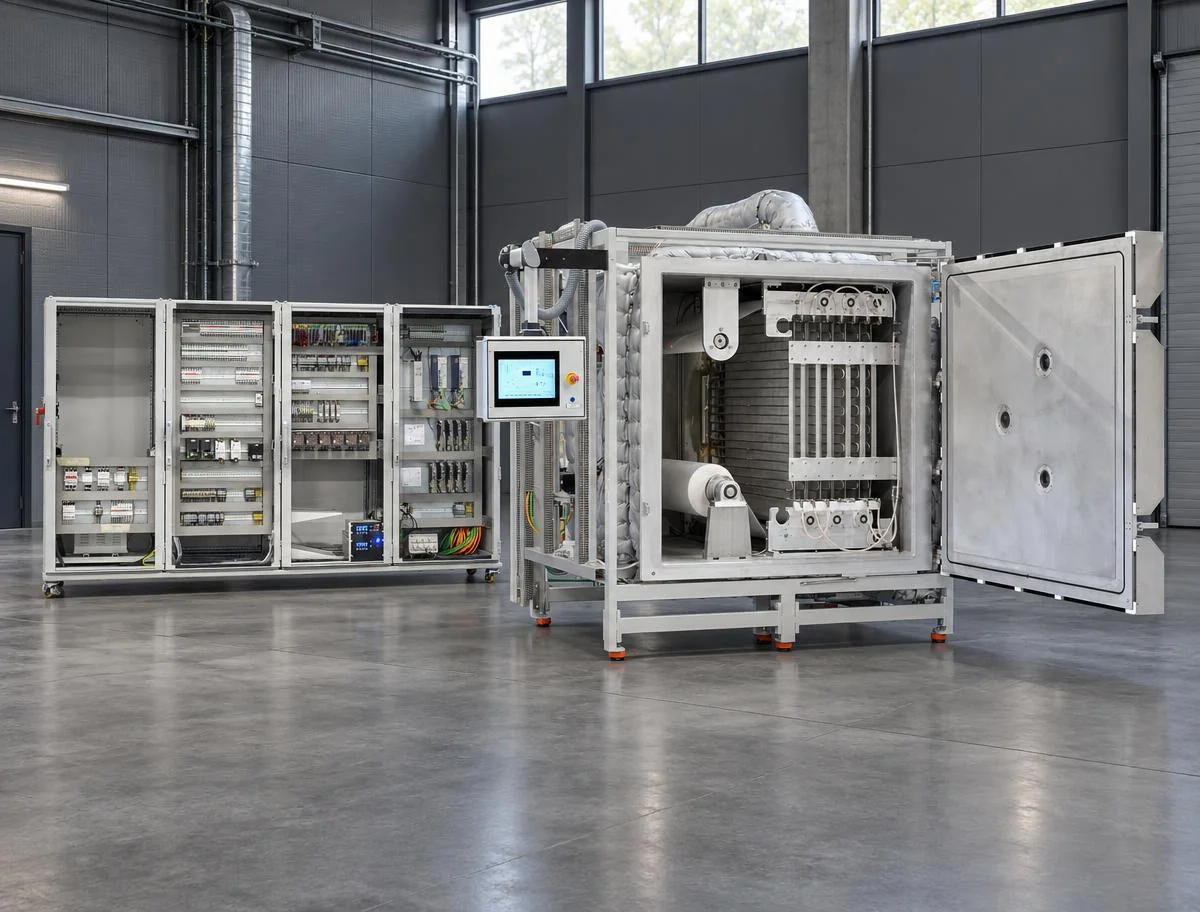
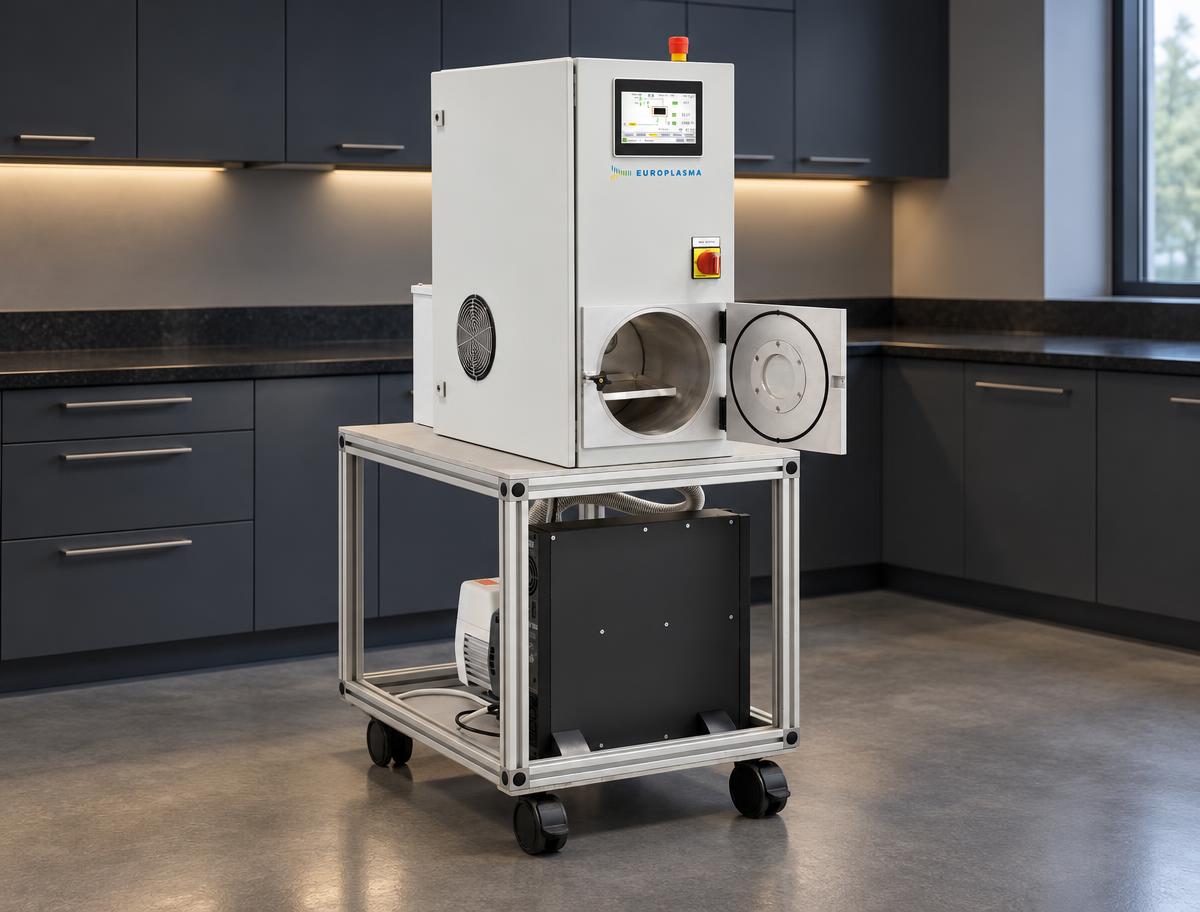
In a low-pressure chamber, an electromagnetic discharge turns a process gas into a stable, cold plasma. Its reactive species clean or activate the surface, or polymerise a monomer into a nanocoating on every surface they reach. Flow, pressure, power and temperature are tightly controlled, and operators are never exposed to the chemistry.
| Capability | Vacuum plasma (Europlasma) | Atmospheric plasma (CPI) |
|---|---|---|
| Pressure | Low pressure, closed chamber | Atmospheric, inline |
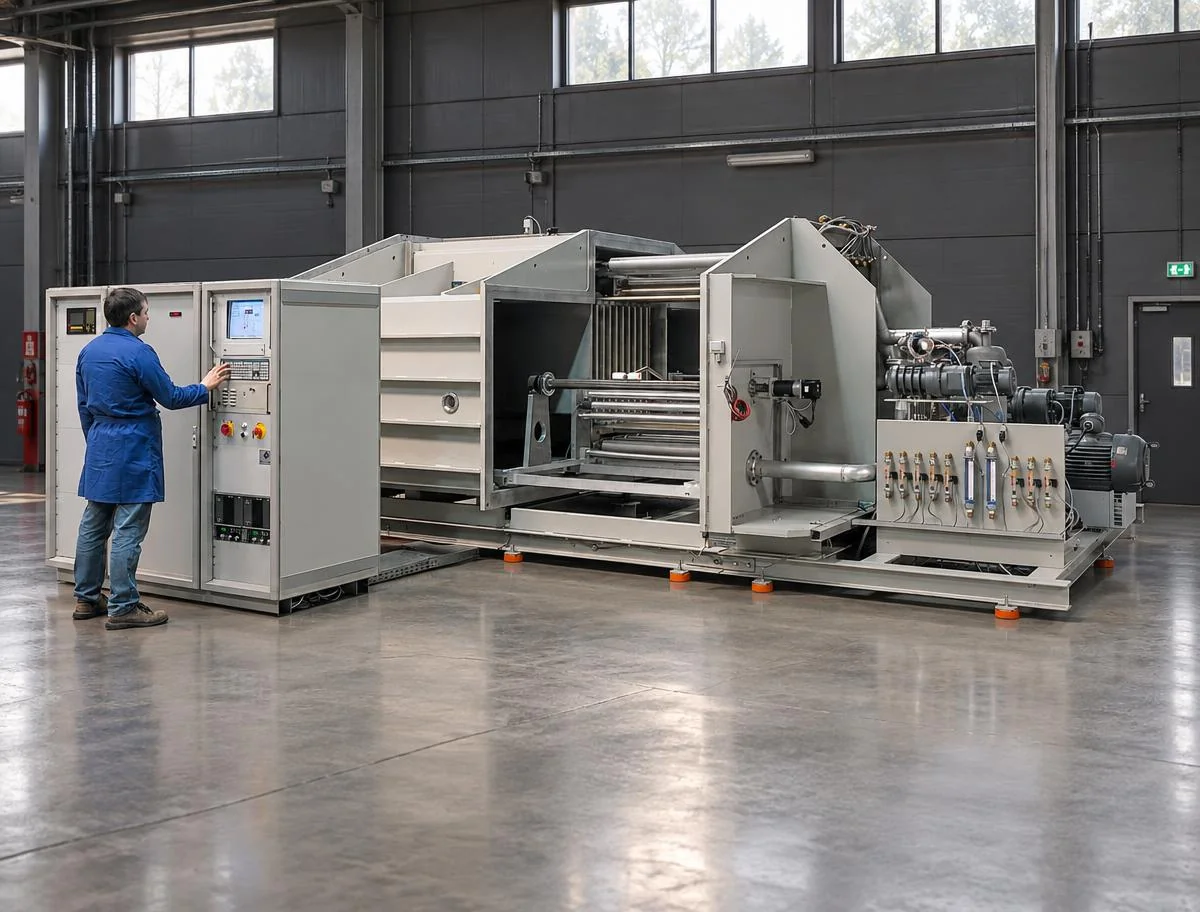
| Formats | Batch parts and roll-to-roll (10–180 cm) | Roll-to-roll (up to 2 m) |
| Line speed | Batch cycles or roll-to-roll | 10–500 m/min |
| Coating thickness | 10 nm to 1 µm | 1 to 30 nm |
| Coating reach | Through the thickness, 3D parts | Surface of flat, flexible webs |
| Best for | Porous media, membranes, medical devices, electronics | Films, liners, labels, tapes |
| Resource | Traditional DWR | Plasma DWR | Difference |
|---|---|---|---|
| Fluorochemicals | 19,685 kg | 3,733 kg | −80% |
| Electricity | 1,066,667 kWh | 508,393 kWh | −50% |
| Water | 437,445 L | 0 L | −100% |
Fluorinated DWR finish with high wash durability. Consumption falls further when durability requirements are lower.*
The industry adopts low-pressure plasma to clean PCBs, then to activate plastics.
Filtration producers start cleaning and activating filter media with plasma.
Europlasma installs its first roll-to-roll low-pressure plasma system.
Plasma polymerisation adds permanent hydrophobic, oleophobic and hydrophilic nanocoatings.
PFAS-free PlasmaGuard® S and X grades, and biofunctional coatings for life sciences.
More than 120 patents and patent applications filed since 2000, covering machine design, processes and plasma deposition methods. EU-supported innovation projects with international partners. Peer-reviewed work presented at FILTECH 2024 and 2026.
Part of
Europlasma NV, Oudenaarde, Belgium — part of the Plasmalex Group. One of four specialized companies within the group, delivering industrial solutions in plasma surface treatment technology.

Atmospheric cold plasma surface treatment for flexible substrates. Precision chemistry from laboratory to production.

Specialized in web converting processes, Spoolex is involved in complete projects management: from machine design, to manufacturing and full production phase.

COAT-X is producer of world's tightest implantable multilayer COAT-X thin films with a unique range of parylene, ALD and multilayer barrier solutions and equipment.